
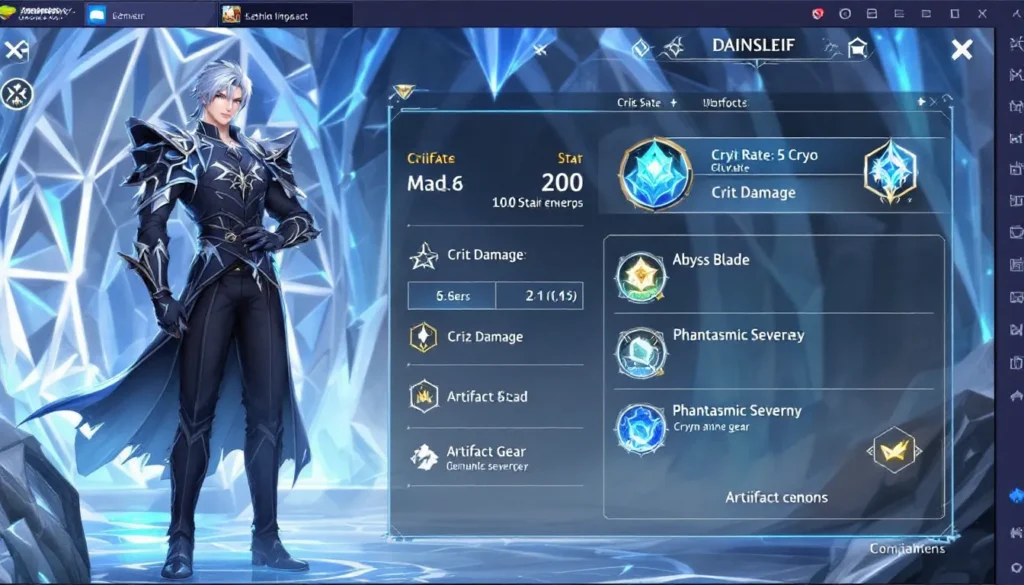
Dainsleif stands as one of Genshin Impact’s most intriguing characters, bridging the gap between mystery and raw combat power. As a 5-star Cryo sword wielder, he’s become a pivotal figure in the game’s expanding narrative, with mechanics that feel fresh alongside established meta picks. Whether you’re chasing his story significance in the Abyss or building him as a DPS powerhouse, Dainsleif in Genshin Impact demands a nuanced approach. This guide breaks down everything from his ability kit to optimal team compositions, so you can maximize his potential whether you’re tackling Spiral Abyss or exploring Teyvat.
Table of Contents
ToggleKey Takeaways
- Dainsleif in Genshin Impact excels as a 5-star Cryo sword DPS in Freeze team compositions, where his burst damage and consistent Cryo application dominate Spiral Abyss encounters.
- Maximize Dainsleif’s damage by prioritizing Ascension 6, leveling Elemental Burst to level 10, and stacking Crit Rate (50%+) and Crit DMG (100%+) in artifact builds.
- Pair Dainsleif with Shenhe (Cryo support), Yelan (Hydro applicator), and Kazuha (grouper) for optimal team synergy that amplifies his Cryo scaling and crowd control potential.
- Animation-canceling normal attacks into charged attacks and burst windows significantly increases DPS and rotation efficiency in Spiral Abyss, especially against frozen or grouped enemies.
- While C0 Dainsleif is viable for all content, C2 provides a noticeable 10-15% DPS boost and C6 unlocks burst-spam rotations, making them the key constellation power spikes for competitive players.
Who Is Dainsleif?
Background & Story Significance
Dainsleif arrives in Genshin Impact as a character whose history stretches back across Teyvat’s ages, shrouded in lore that unfolds gradually through quests and voice lines. He operates from the shadows of Khaenri’ah’s collapse, carrying memories of a civilization long erased. Unlike most playable characters, Dainsleif isn’t driven by the typical elemental ambitions, instead, he pursues truth and understanding tied to the Traveler’s origins.
His design reflects a warrior hardened by time and conflict. Clad in dark, elegant clothing reminiscent of nobility from ages past, his appearance alone signals he’s not a typical adventurer. The narrative treats him with weight, presenting his motivations as complex and sometimes conflicting with the Traveler’s immediate goals. Story quests involving Dainsleif consistently rank among the most talked-about content, thanks to how they expand the game’s deeper lore without relying on excessive exposition.
Role in the Abyss Narrative
The Abyss is Dainsleif’s stage, and his relevance to that storyline cannot be overstated. He exists as both guide and participant in the conflict between the Traveler and forces dwelling in the depths of Teyvat. His connection to the Abyss stems from knowledge few characters possess, he understands the mechanics of descent, the corruption within, and the entities dwelling there.
Within the narrative, Dainsleif walks a precarious line. He aids the Traveler’s investigation into their own origins and the broader conspiracy surrounding Khaenri’ah’s downfall, yet his methods and allegiances remain ambiguous. This narrative ambiguity makes him compelling: players can’t quite pin down whether he’s fully trustworthy, which mirrors the tension in the story itself. His involvement in Abyss-related quests has progressively deepened, hinting at a larger role in Genshin Impact’s endgame story.
Dainsleif’s Abilities & Mechanics
Normal & Charged Attacks
Dainsleif’s Normal Attack chain, “Earnest Strikes,” feels deliberate and weighty. He performs up to 5 strikes, with the final hit delivering significant knock-back damage. The attack speed is moderate, not as fast as some sword users, but the individual hit multipliers compensate. His motion values scale well into late-game builds, and the animation commitment is reasonable for active play.
His Charged Attack mechanic deserves attention. Dainsleif consumes stamina to perform a forward slash, and crucially, it doesn’t just damage, it applies a Cryo aura and benefits from his passive talents in specific ways. The charged attack combo is less about spam and more about intentional placement within rotations. Players who animation-cancel cleanly see significantly better DPS than those mashing buttons.
Compared to other Cryo sword users like Ayaka or Kazuha, Dainsleif’s normals are slower but hit harder individually. This is a trade-off worth understanding: in team compositions where he’s off-field, these normals matter less: as a main DPS, they matter tremendously.
Elemental Skill Overview
Dainsleif’s Elemental Skill, “Abyss Blade,” summons a spectral construct that deals Cryo damage to nearby enemies and marks them with a debuff. The skill has a manageable cooldown and no energy cost, making it spammable in extended fights. What makes it mechanically interesting is how it interacts with his other abilities, specifically, how marked enemies amplify subsequent damage.
The mark application is consistent, hitting all enemies in the AoE, but individual enemy duration varies slightly. In practice, this means multi-enemy scenarios always have marked targets available, while single-target fights require careful timing. The skill’s damage isn’t primarily where his DPS comes from, but it’s a consistent, reliable source that slots perfectly into rotations.
One detail: the spectral construct persists briefly after summoning, allowing for positioning plays. Skilled players use this to reposition or bait enemy attacks, turning what looks like a damage ability into a subtle defensive tool.
Elemental Burst & Damage Output
Dainsleif’s Elemental Burst, “Phantasmic Severance,” is his damage peak. This ability deals massive Cryo damage, scales with ATK stat, and applies Cryo aura to the entire AoE. The energy cost sits at 70, which is reasonable given the damage output and the energy generation from skills and normals.
The burst’s multiplier is where players should focus attention. At level 10, it rivals other 5-star Cryo DPS bursts, and it benefits significantly from Crit Rate/Crit DMG scaling. This makes artifact farming feel worthwhile, every point of Crit DMG translates directly to burst damage.
Postburst, Dainsleif enters a brief window where his attacks gain bonus elemental damage. This is the payoff window: if you’re cycling back to normals and charged attacks immediately, this is where your main DPS window lives. Missing this window because you’re repositioning or waiting for cooldowns is a common mistake among newer players.
Best Builds for Dainsleif
Main DPS Build
Building Dainsleif as your primary damage dealer means prioritizing ATK scaling and Crit stats above all else. The standard framework looks like this:
- Sands: ATK%
- Goblet: Cryo DMG%
- Circlet: Crit Rate (if you’re below 50%) or Crit DMG (if you’re comfortably above 50%)
Your target stats should hit around 50% Crit Rate minimum, 100% Crit DMG to function competently. Pushing toward 60%+ Crit Rate and 150%+ Crit DMG is the ideal. Every substat priority goes: Crit Rate/Crit DMG > ATK% > Cryo DMG% (if not on goblet).
The main DPS build works best when Dainsleif rotates frequently on-field, think of him as the active carry who applies Cryo, triggers reactions, and handles sustained damage. This build shines in scenarios where you’re already running Cryo supports like Shenhe or Kazuha, and you’re stacking elemental damage bonuses.
Support Build Options
Running Dainsleif as a sub-DPS or support requires a different stat distribution. This is viable in Freeze teams where he’s not the primary source of damage but contributes significantly off-field. The support build looks like:
- Sands: ATK% or Energy Recharge (depending on team energy)
- Goblet: Cryo DMG%
- Circlet: Crit Rate
You’ll sacrifice some Crit DMG for Energy Recharge, settling around 120%-150% ER depending on your team. Crit Rate can drop slightly since burst frequency is less demanding. This build works well in Permafreeze compositions where enemies are consistently frozen and burst damage is secondary to consistent Cryo application and elemental damage reduction.
Team Composition & Synergies
Optimal Team Setups
Dainsleif shines in Freeze teams above all else. The core composition looks like:
Freeze Core: Dainsleif + Cryo Support (Shenhe or Rosaria) + Hydro Applicator (Yelan or Xingqiu) + Anemo Grouper (Kazuha or Venti)
This team locks enemies in place while Dainsleif applies Cryo on-field. The Hydro applicator triggers Freeze consistently, and the Anemo character groups scattered enemies. It’s arguably the most comfortable way to play Dainsleif, especially in Spiral Abyss where crowd control is invaluable.
Melt-focused setup: Dainsleif + Pyro applicator (Bennett or Kazuha) + off-field Cryo (Ganyu or Rosaria) + healer/buffer
This is less common because Dainsleif’s Cryo application is fast, making Melt trigger inconsistently. But, if you’re running him with low-investment supports and need damage compression, this works. The key is using Dainsleif’s burst for Melt reaction triggers, not normal attacks.
Mono-Cryo: Dainsleif + Shenhe + Kazuha + Diona
This setup maxes Cryo scaling without worrying about Hydro application or reactions. It’s viable for single-target scenarios where Freeze isn’t available (like certain boss fights). Mono-element teams suffered from balance changes, but Dainsleif’s personal damage carries the setup.
Character Pairings
Shenhe is Dainsleif’s best Cryo support, full stop. Her Quill buff amplifies all Cryo damage by 15-30% depending on investment, stacking multiplicatively with other bonuses. Her off-field role demands minimal field time, letting Dainsleif dominate rotation. In Freeze teams with Shenhe, Dainsleif’s damage ceiling jumps noticeably.
Yelan as a Hydro applicator is superior to Xingqiu in Dainsleif teams. She applies Hydro consistently without needing exact positioning, and her Exquisite Throw passive generates extra damage. Xingqiu still works (especially C6), but Yelan’s off-field DPS is strictly better.
Kazuha is the universal pairing that makes nearly everything work. His Elemental DMG buff and VV shred are universally useful, and his mobility helps reposition Dainsleif when needed. That said, Venti is a stronger grouper if enemies are light enough to be Venti-lifted (most Abyss enemies are, honestly).
Diona as a cryo battery is worth considering if your Dainsleif’s Energy Recharge falls short of comfortable burst uptime. She’s also the best healer option for Cryo teams, solving sustainability issues without sacrificing damage (unlike Bennett, who can occasionally mess up reactions).
While Raiden Genshin Impact excels in energy-hungry team compositions, Dainsleif functions fine without her, his skill generates reasonable energy, and supports like Diona or Shenhe can cover battery needs. But, if you’re running Raiden for other team members and Dainsleif slots into that group, the synergy is solid.
Leveling & Ascension Guide
Materials & Farm Locations
Dainsleif’s ascension materials are split into common and uncommon drops, with one region-locked element. Here’s the breakdown:
Common Materials:
- Cryo Sliver / Chunk / Gemstone: Drop from Cryo-aligned enemies (Cryo Hilichurls, Ice Shields, etc.). You’ll farm these passively while clearing other content, but dedicated farming at Dragonspine nets 10+ per sweep.
- Shivada Jade: The Cryo gem, dropped by Cryo Hypostasis (Dragonspine) or Maguu Kenki (Inazuma). Cryo Hypostasis is faster: expect 3-5 per fight.
Region-Locked:
- Ley Line Disorder Blossoms: These cycle weekly. Dainsleif requires Cryo Cruxes (or the equivalent in your patch version). These ONLY drop from specific weekly bosses, so plan accordingly. Missing a week sets you back.
Talent Books:
- Dainsleif’s talent materials come from the Forsaken Rift domain (Inazuma), which requires 40 Resin per clear. You’ll need roughly 18 blue books and 66 gold books per full talent level-up. Farming 2-3 times weekly is realistic over several weeks.
Boss Drops:
- Weekly Bosses: Dainsleif requires materials from regional bosses, specifically, check your current patch for exact drops. Allocate 30-50 Resin per week to boss farming until you’ve collected enough.
Leveling Priority:
- Ascensions first: Push Dainsleif to Ascension 4 minimum (unlocks Level 80) before committing heavy resources to talents. This gives you stat scaling and unlocks passive effects.
- Talent Priority: Max out Elemental Burst > Normal Attack > Elemental Skill. Burst damage is where he shines, so that pays off fastest.
Ascension Priority Recommendations
Honestly, Ascension 6 (Level 90) is worth the investment if you’re running Dainsleif as a main DPS. The ATK scaling on his burst multipliers alone justifies the grind. Casual players can settle at Ascension 5 (Level 80) without major issues, but competitive Abyss runs demand the extra stats.
Talent Priority:
- Elemental Burst to Level 10, This is non-negotiable. Every level adds raw damage multipliers that scale with ATK and Crit.
- Normal Attack to Level 9, If he’s on-field often, this matters. If he’s burst-focused in Freeze teams, you can push this last.
- Elemental Skill to Level 8, Lower priority since it’s mostly utility and off-field damage.
Don’t sleep on passive talents. Dainsleif’s second passive affects his Cryo application, and his first passive influences Energy Recharge indirectly. Reading these is crucial for optimization. The Genshin Impact community often discusses these in Genshin Impact Archives, so checking build discussions there can reveal synergies you missed.
Combat Tips & Strategies
Rotation & Playstyle
A typical Dainsleif rotation in a Freeze team looks like this:
- Support setup (1-2 seconds): Position Shenhe, apply her Quill buff, rotate to Yelan or Xingqiu and trigger their skill.
- Dainsleif in (4-5 seconds): Elemental Skill for Cryo application and mark, then 2-3 normal attacks to build energy.
- Charged attack combo (2 seconds): Weave in charged attacks during normals if stamina allows, this boosts personal DPS without extending rotation.
- Burst window (2-3 seconds): Trigger Elemental Burst for massive Cryo damage and the passive buff.
- Post-burst aggression (3-4 seconds): Ride the passive buff by continuing normal attacks until burst buff expires or rotation resets.
The key principle: Never let Dainsleif sit idle. His damage comes from activity, normals, charged attacks, burst windows. If he’s off-field for extended periods, you’re wasting potential.
For Melt or Mono-Cryo, the rotation shifts slightly. Burst becomes the damage peak you build toward, and everything before is setup. This means shorter on-field time per rotation but higher on-field damage density.
Animation-canceling is worth learning. Canceling normal attack animations into charged attacks or bursts shaves seconds off rotations, squeezing extra damage in tight DPS windows. This isn’t mandatory for casual play, but Abyss speedrunners rely on it heavily.
Domain & Abyss Performance
In artifact domains, Dainsleif trivializes Blizzard Strayer farming due to natural Freeze synergy. Running him with off-field Hydro and Cryo instantly locks enemies, letting you clear in under a minute consistently. His Cryo application is reliable enough that you’ll rarely deal with ice immunity issues.
Spiral Abyss is where Dainsleif truly shines. Recent floors heavily favor Cryo teams, and Dainsleif’s personal damage carries even against uncomfortable enemies. Against Frozen targets, he hits like a truck. Against shielded enemies, his Cryo application helps groupmates break shields faster.
Problematic matchups:
- Cryo-immune enemies (Cryo Fatui, certain bosses): Dainsleif becomes a support only. You’ll need a secondary DPS on the team.
- Heavy-interrupt enemies (Lawachurls, certain Abyss enemies): Positioning and timing matter more. Animation-canceling becomes crucial to avoid being staggered mid-combo.
- Scattered enemies: Dainsleif benefits heavily from grouping. If enemies are spread, he struggles. Pairing with Venti or Kazuha becomes mandatory.
In spiral Abyss against single-target bosses, Dainsleif still performs well, just rotate carefully since you can’t rely on Freeze for comfort. His burst damage and consistent Cryo application make him viable across most scenarios.
Constellations & Refinements
Key Constellation Effects
Dainsleif’s constellations are power spikes, but none are mandatory. Here’s the breakdown:
C1: Increases Elemental Skill cooldown reduction and energy generation. Useful for Burst uptime, but you won’t feel a massive difference.
C2: Amplifies Cryo damage after using Elemental Burst. This is a noticeable damage boost, roughly 10-15% personal DPS increase. It starts to feel “pay-to-win” territory here.
C3: Increases Elemental Burst level by 3, capping at 13. This translates to roughly 20% more burst damage. Significant, but not game-changing since you’re already bursting regularly.
C4: Adds a follow-up effect to Elemental Skill, dealing additional Cryo damage. The damage is moderate, but it adds complexity to rotations. Advanced players can leverage this for higher DPS.
C5: Increases Elemental Skill level by 3. Similar to C3 for burst, noticeable but not essential.
C6: The big one. Grants Crit Rate buff after bursting, and refreshes Elemental Skill. This turns rotations into burst-spam machines, with Skill resetting on cooldown. Damage amplification is roughly 25-30% compared to C0, but also significantly changes playstyle.
Real talk: C0 Dainsleif is viable in Abyss and casual content. C2 and C6 are the “whale constellation” territory where you feel the difference. C1, C3-C5 are quality-of-life improvements but not essential.
If you’re a spender, C2 is the sweetspot for competitive Abyss. C6 is overkill for all content except speedrunning.
Signature Weapon Refinement Value
Mistsplitter Reforged at R1 is already strong, but refinement progression matters. Here’s the real math:
- R1 to R2: +5% Elemental DMG per Emblem stack. Total gain at max stacks: ~15% boost. Noticeable but not earth-shattering.
- R2 to R3: Another +5% per stack. Cumulative gain is starting to feel substantial (roughly 30% total from R1 baseline).
- R3 to R4: Diminishing returns kick in. You’re hitting 40% at max stacks, but weapon gacha luck is… luck. Most players settle at R1 or R2 if lucky.
- R5: The “big reward” scenario. Mistsplitter at R5 is arguably overkill, but the damage ceiling is noticeably higher.
Practical perspective: If you’re spending Primogems, prioritize getting C2 Dainsleif over R5 weapon. His constellations affect gameplay more directly than weapon refinement. But, if you’re already at C6 or just pulling for the weapon, R3+ feels worthwhile.
As a comparison, Genshin Impact Top Up systems make acquiring these refinements expensive, manage expectations accordingly. Free-to-play players should focus on R1 weapon and C0 character, which is entirely viable.
Conclusion
Dainsleif in Genshin Impact represents a rare blend of narrative depth and combat viability. He’s not just a character you pull for story reasons, his mechanical kit is legitimately strong, especially in Freeze compositions where he dominates. Whether you’re building him as a main DPS with Crit scaling or fitting him into a support slot, the investment pays dividends in both casual exploration and competitive Spiral Abyss.
The path to maximizing Dainsleif is straightforward: prioritize Ascension 6 and Burst talents, stack Crit stats obsessively, and pair him with reliable Hydro applicators and Cryo supports. Freeze teams using Dainsleif feel broken in the best way, enemies lock down while he spins up burst after burst. If you’re unsure where to start, resources like Game8 and Twinfinite offer tier lists and meta comparisons that contextualize where Dainsleif fits in the broader Genshin Impact character landscape.
The grind is real, artifact farming takes weeks, and talent books require consistent Resin investment. But the payoff is a character capable of handling virtually any content thrown at him. If you’re serious about tackling endgame content or just appreciate a character with incredible story backing and gameplay depth, Dainsleif is worth every resource invested. The Abyss awaits, and with Dainsleif in your team, you’re prepared to face it.